Drug, Tobacco, & Alcohol Policies and Support
If you struggle with a drug or alcohol use disorder, we’re here to help. Through our mental health services, we can connect you to counseling services or community resources.
Resources
You don’t have to do it alone. Connect with resources on campus and in the community
who can support your recovery from drug or alcohol use disorder.
General Resources
Employee Assistance Program
(for full-time employees)
713-500-3327
Bay Area Council on Drug and Alcohol
800-510-3111
Residential Treatment and Hospitals
Bay Area Recovery Center
281-337-1343
Memorial Hermann Prevention and Recovery Center (PaRC)
713-939-7272
877-464-7272
Support Groups
Alcoholics Anonymous
713-686-6300
Narcotics Anonymous
713-943-1111
Campus Policies Regarding Alcohol and Illegal Drugs
State law prohibits anyone under 21 from possessing or consuming alcoholic beverages.
San Jacinto College policy prohibits employees and students from unlawfully manufacturing, distributing, dispensing, selling, possessing, ingesting or using drugs or alcohol:
- In the workplace or on College grounds
- In College vehicles
- At College-related or College-sponsored activities, regardless of location
- While otherwise on duty
Employees and students may not report to work, class or a College activity, including College athletics, while under the influence of drugs or alcohol.
The Chancellor may allow the use, service or consumption of alcohol by people over 21 at certain College events.
Prescription and over-the-counter medications are allowed when taken at the standard dosage or as prescribed by a physician.
Employees who receive College funds for travel may not use those funds to purchase alcoholic beverages.
For more information about College standards of conduct related to drugs and alcohol, see the following resources on the Policies and Procedures page:
- Policy III.3006.G, Prohibited Use of Drugs and Alcohol
- Procedure III.3006.G.a, Prohibited Use of Drugs and Alcohol
- Student Handbook and Code of Conduct, which applies to all students
- Athletic Handbook, which applies to student athletes
Alcohol Abuse
Alcohol affects the central nervous system and can impair judgment, coordination and
decision-making. Even low levels of alcohol can make it harder to use recently learned
skills and perform complex tasks. As alcohol levels increase, it can affect balance,
movement, awareness and other basic functions.
Moderate alcohol use can also affect how you process information. It may make it harder to understand a situation, consider different factors and recognize the possible consequences of your actions. This can lead to impulsive decisions and risky behavior.
Long-term, heavy alcohol use can cause serious health problems. It can damage the brain, heart, liver and other organs and increase the risk of certain cancers, including cancers of the mouth, esophagus, stomach and liver. Heavy drinking can also cause cirrhosis, alcoholic hepatitis and peptic ulcers.
Illicit Drugs
Illicit drugs include several types of substances:
Narcotics: Heroin and other opioids
Depressants: Barbiturates and certain prescription drugs when used illegally
Stimulants: Cocaine, crack cocaine and methamphetamine
Hallucinogens: PCP, LSD and mescaline
Cannabis: Marijuana and hashish
Inhalants: Nitrous oxide, amyl nitrite (poppers) and certain chemical solvents
Designer drugs: MDMA (Ecstasy) and other synthetic drugs
Narcotics
Narcotics, also called opioids, can cause feelings of euphoria followed by drowsiness,
nausea and vomiting. Regular use can lead to tolerance and physical dependence. Misusing
opioids also increases the risk of overdose and other serious health problems.
Sharing or using contaminated syringes can spread infections such as HIV and hepatitis. It can also cause serious infections, including endocarditis, an inflammation of the heart's inner lining.
Depressants
Depressants slow activity in the central nervous system and can have effects similar
to alcohol. Small amounts may cause relaxation and calmness. Larger amounts can cause
slurred speech, poor coordination, unsteady walking and changes in perception.
Very large amounts can slow breathing and may lead to coma or death. Combining depressants with alcohol can greatly increase these effects and the risk of serious harm. Regular use can also lead to physical or psychological dependence.
Stimulants
Cocaine is a stimulant that speeds up activity in the central nervous system. Short-term
effects may include dilated pupils, increased heart rate and blood pressure, faster
breathing and increased body temperature. Cocaine use can also cause a runny or stuffy
nose.
Long-term use may damage the tissues inside the nose, including the nasal septum. Using cocaine with unsterile equipment can spread infections such as HIV and hepatitis.
Cocaine can also cause anxiety, paranoia, seizures and other serious health problems. Crack cocaine is highly addictive and can cause many of the same effects, including increased heart rate and blood pressure, insomnia, loss of appetite and paranoia.
Cocaine can lead to physical and psychological dependence, and tolerance can develop with repeated use. An overdose can occur and may be life-threatening.
Hallucinogens
Phencyclidine (PCP)
PCP can cause feelings of detachment and change how you experience time, movement and your surroundings. It can reduce coordination, dull the senses and affect speech.
Long-term use may cause memory and speech problems and contribute to mood changes, anxiety, paranoia or aggressive behavior. High doses can cause seizures, loss of consciousness, breathing problems, heart problems and other life-threatening effects.
LSD, Mescaline and Psilocybin
LSD, mescaline and psilocybin can change how you perceive your surroundings and may
cause illusions or hallucinations. Physical effects may include dilated pupils, increased
body temperature, heart rate and blood pressure, loss of appetite, sleeplessness and
tremors.
Feelings and perceptions can change quickly. Some people may experience panic, confusion, anxiety, paranoia or a loss of control. In some cases, changes in perception or other effects can occur after the drug has left the body.
Inhalants
Inhalants are chemicals that can be breathed into the lungs and affect the brain within
seconds. Their effects may last for several minutes. Short-term effects can include
nausea, coughing, nosebleeds, fatigue, poor coordination, loss of appetite and impaired
judgment.
Some inhalants can slow breathing and heart rate, while others can cause a rapid heartbeat and severe headaches.
Long-term or repeated use can seriously damage the brain, liver, kidneys, nerves and other organs. Inhalant use can also cause seizures, heart rhythm problems, loss of consciousness and other life-threatening conditions.
In some cases, inhaling certain chemicals can cause sudden death, even after a single use.
Marijuana/Cannabis
Marijuana can affect memory, attention, coordination and perception. Short-term effects
may include changes in how you perceive time, increased heart rate and problems with
short-term memory. It can also reduce coordination and reaction time, making driving
unsafe.
Regular or heavy marijuana use may affect memory, learning and mental health. Smoking marijuana can also damage the lungs and increase the risk of respiratory problems.
Marijuana use can lead to tolerance and dependence, and some people may have difficulty stopping its use.
Designer and Synthetic Drugs
Designer drugs are synthetic substances made to produce effects similar to other drugs.
Because they can be made with different chemicals and formulas, their effects can
be unpredictable and dangerous.
Some synthetic drugs can cause serious health problems, including seizures, loss of consciousness, breathing problems, heart problems and brain or organ damage.
Some synthetic drugs act like opioids and may cause extreme drowsiness, slowed breathing, loss of coordination and overdose. Others act as stimulants or hallucinogens and may cause agitation, anxiety, confusion, paranoia, hallucinations, rapid heart rate, insomnia or seizures.
Repeated use can lead to dependence and withdrawal symptoms.
Other Misused Substances
Some substances may not be classified as controlled substances under federal law but
can still be harmful when misused. Examples include synthetic stimulants, such as
“bath salts”; dextromethorphan (DXM), an ingredient found in some cough medicines;
and Salvia divinorum, a plant with hallucinogenic effects.
Misusing these substances can cause confusion, dizziness, agitation, impaired coordination, paranoia, hallucinations, seizures and other serious health effects.
Products containing DXM may also contain other active ingredients that can cause additional health problems when taken in excessive amounts.
General Disciplinary Procedure
For alleged violations of public law or College student life policies, the College
may review the allegations and impose disciplinary sanctions in addition to any legal
proceedings. Sanctions may include, but are not limited to, reprimand, probation,
suspension or expulsion.
Discipline
Section 3.9 of the Student Code of Conduct addresses drugs and alcohol. The College
will investigate all reported violations and determine appropriate sanctions according
to its disciplinary procedures.
Students may face College sanctions, criminal penalties, or both. Disciplinary sanctions may include, but are not limited to, reprimand, probation, suspension or expulsion.
Alcohol
The use, possession or distribution of alcohol is strictly prohibited on College property,
regardless of a person's age.
Alcohol is also prohibited at off-campus activities when the activity or the student's participation is sponsored by the College or a College-recognized student organization.
Controlled Substances
The unlawful use, possession or distribution of controlled substances is strictly
prohibited on College property. This policy also applies to students participating
in off-campus activities when the activity or the student's participation is sponsored
by the College or a College-recognized student organization.
Students found to have violated this policy may face severe disciplinary sanctions, including permanent suspension from the College. When a violation also breaks public law, the College will file charges for prosecution by the appropriate law enforcement agency.
Under public law, a conviction for the unlawful use, possession or distribution of illicit drugs may result in a fine, imprisonment, or both.
Employees
Following the College's policy on alcoholic beverages and illegal drugs is a condition
of employment. Employees who violate the policy may face disciplinary action, up to
and including termination, or may be required to participate satisfactorily in a drug
abuse assistance or rehabilitation program.
Employees who work directly on a federal grant or contract and are convicted of violating a criminal drug law must notify their immediate supervisor within five days of the conviction.
The supervisor must promptly report the conviction to the appropriate SLT member and the Vice Chancellor, Human Resources. The Vice Chancellor, Human Resources, will then notify the federal agency that provided the grant or contract within 10 days of receiving notice of the conviction from the employee or another reliable source.
Board Policy IV-C-7 outlines when employees may be tested for the unlawful use of drugs and alcohol. Find these documents on the Policies and Procedures page.
Students
San Jacinto College recognizes the challenges associated with alcohol and substance
misuse. Education is a key part of the College’s efforts to address these concerns.
Through educational programs and factual information, we help you understand the risks
of alcohol and other substances so you can make informed decisions. This includes
information about illegal substances and their effects, as well as responsible alcohol
use for those who choose to drink.
If you are concerned about your alcohol or substance use, you can seek confidential
assistance from the College by making an appointment with a counselor in the Educational Planning & Counseling Center. The College does not provide treatment
or rehabilitation programs, but counselors can connect you with qualified providers
who offer these services.
Employees
College employees who supervise others should be aware of job performance concerns
that may be related to alcohol or substance misuse. Employees who need assistance
can access support through the Employee Assistance Program and the College’s group
health insurance program. The Employee Assistance Program also offers alcohol and
drug abuse seminars at no cost to College employees.
Additional resources are available in the community, including private counseling, self-help groups such as Alcoholics Anonymous and Narcotics Anonymous, and inpatient and outpatient treatment program
Drug-Free Workplace and Biennial Review
San Jacinto College is committed to maintaining a drug-free learning and work environment
and complying with state and federal laws related to the prevention of illegal drug
use and alcohol abuse.
The College will review its drug and alcohol prevention program every two years. The review will:
- Evaluate the effectiveness of the program and identify needed changes.
- Ensure that program sanctions are consistently enforced.
The vice chancellor for Human Resources is responsible for initiating the biennial review.
Legal Sanctions and Penalties
City of Houston Ordinance
Offense: Possession, provision, sale, barter, production, manufacture, or distribution of any illicit synthetic drug
- Maximum Punishment: Fine not to exceed $2,000
Offense: Offering, displaying, marketing, or advertising for sale any illicit synthetic drug
- Maximum Punishment: Fine not to exceed $2,000
Offense: Purchasing with the intent to provide, sell, barter, produce, manufacture, or distribute any illicit synthetic drug
- Maximum Punishment: Fine not to exceed $2,000
Offense: Failure to publicly display or label herbal incense
- Maximum Punishment: Fine not to exceed $2,000
Offense: Solicitation to purchase or acquire a controlled substance, controlled substance analogue, dangerous drug or volatile chemical
- Minimum Punishment: Fine not less than $100
- Maximum Punishment: Fine not to exceed $2,000
Texas Law
Offense: Possession of salvia divinorum
- Minimum Punishment: Confinement in jail term of 6 months –20 years and fines from $2,000--$10,000
- Maximum Punishment: Confinement in jail term of 5-99 years and fine not to exceed $50,000</p>
Tobacco Use
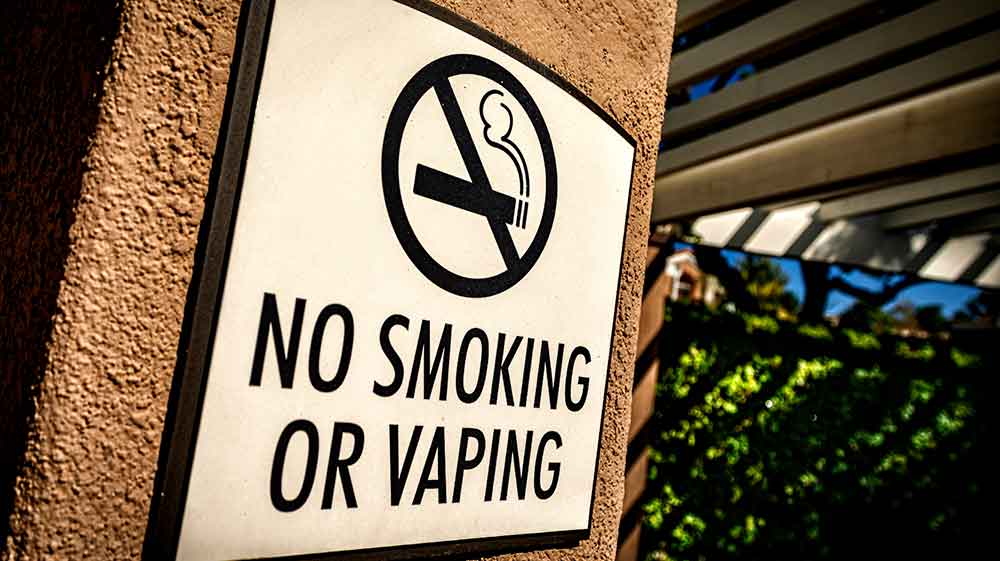
Smoke-Free College
San Jac is a smoke-free and tobacco-free college, except in designated areas. This
includes smoking and vaping.
"Smoking" means inhaling, exhaling, burning, or vaporizing. It also includes using
liquid nicotine, electronic devices, and any form of tobacco — synthetic or other
plant-based substances.
"Tobacco Products" means all forms of tobacco and nicotine-delivery devices including,
but not limited to, cigarettes, cigars, pipes, water pipes, and electronic and smokeless
tobacco products, including liquid nicotine and chewing tobacco. This does not apply
to smoking cessation items such as chewing gum, patches, or medication.
For more details, reference the tobacco policy and procedures.
Designated smoking areas:
Central Campus
Generation Park Campus
Maritime Campus
North Campus
South Campus